Those who know Silver Creek—who fish its waters, watch birds along its banks, or have simply spent time there—already understand the answer. To many locals, the “Creek” is more than water flowing through a meadow. It is a memory, a story, and a place held close to the heart—something that must be protected.
Silver Creek carries deep history and meaning, woven into the fabric of the community. As a spring creek, it is rare by nature—and even more exceptional for its size and broad public accessibility. Rising from an underground aquifer, its clear, cold water supports exceptional aquatic habitat, making it ideal for cold‑water trout and a remarkable diversity of wetland species. Birds thrive here, wildlife is abundant, and the landscape itself feels alive.
In 1939, Ernest Hemingway captured the essence of Silver Creek when he wrote: “You’ll love it here, Schatz…There’s a stream called Silver Creek where we shoot ducks from canoe…Saw more big trout rising than have ever seen…Just like English chalk streams…We’ll fish it together next year.”
While Hemingway hunted more than he fished Silver Creek, his son Jack was deeply passionate about its fishery. Today, anglers from around the world come to test their skills on these waters—often leaving humbled and vowing to return.
There is a saying among trout fishers: “Trout don’t live in ugly places.” Silver Creek proves that adage true. Though many landowners have held property along its banks, every one of them is there because of the Creek itself. The Purdy family has owned land here for nearly 100 years, and when The Nature Conservancy purchased the Silver Creek Preserve from the Sun Valley Company in the early 1970s, it marked a lasting commitment to protection and stewardship. Anyone who has walked its banks or stepped into its waters understands why.
Yet Silver Creek today is not the same creek it was a century ago—or even twenty years ago. Change did not happen by intent, but through cumulative land‑use practices and a lack of understanding of the system’s fragility. Siltation from overgrazing, agricultural encroachment, and invasive species has taken its toll. Now is the time to act.
Perhaps the greatest threat Silver Creek faces today is water scarcity. As a spring creek fed by groundwater, its health is directly linked to what happens above ground. Drought, reduced aquifer recharge, and groundwater extraction all place pressure on an already delicate system. New science, improved data, water modeling, and increased awareness have shown us that these trends can be addressed—if we work together.
The Silver Creek Alliance is actively collaborating with landowners, growers, agencies, conservation organizations, and the public to educate, engage, and develop solutions that benefit Silver Creek and the surrounding lands—and, in turn, the entire community. We are in a unique position to permanently protect Silver Creek’s water and preserve its ecological, cultural, and social importance for all who treasure it, have heard of it, or hope to experience it for the first time.
With your help—guided by sound science, committed people, and a strong community—Silver Creek can thrive for generations to come.
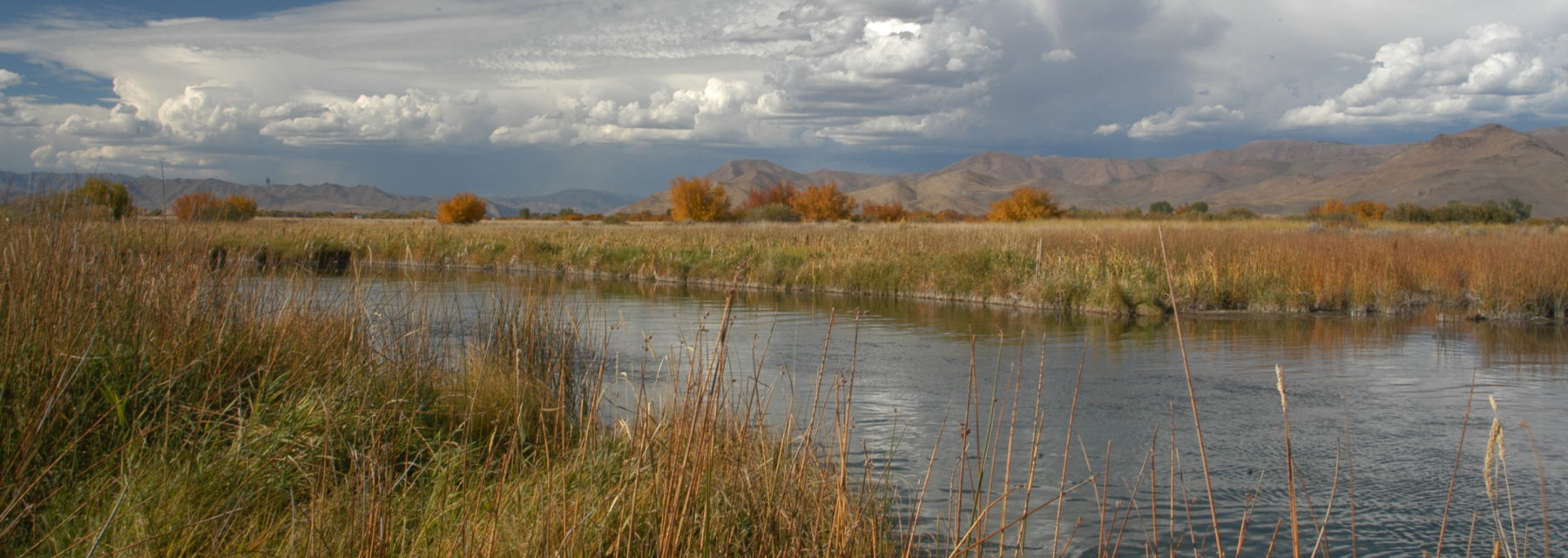
Silver Creek
Silver Creek—what is it, and why protect it?
Those who know Silver Creek—who fish its waters, watch birds along its banks, or have simply spent time there—already understand the answer. To many locals, the “Creek” is more than water flowing through a meadow. It is a memory, a story, and a place held close to the heart—something that must be protected.
Silver Creek carries deep history and meaning, woven into the fabric of the community. As a spring creek, it is rare by nature—and even more exceptional for its size and broad public accessibility. Rising from an underground aquifer, its clear, cold water supports exceptional aquatic habitat, making it ideal for cold‑water trout and a remarkable diversity of wetland species. Birds thrive here, wildlife is abundant, and the landscape itself feels alive.
In 1939, Ernest Hemingway captured the essence of Silver Creek when he wrote:
“You’ll love it here, Schatz…There’s a stream called Silver Creek where we shoot ducks from canoe…Saw more big trout rising than have ever seen…Just like English chalk streams…We’ll fish it together next year.”
While Hemingway hunted more than he fished Silver Creek, his son Jack was deeply passionate about its fishery. Today, anglers from around the world come to test their skills on these waters—often leaving humbled and vowing to return.
There is a saying among trout fishers: “Trout don’t live in ugly places.” Silver Creek proves that adage true. Though many landowners have held property along its banks, every one of them is there because of the Creek itself. The Purdy family has owned land here for nearly 100 years, and when The Nature Conservancy purchased the Silver Creek Preserve from the Sun Valley Company in the early 1970s, it marked a lasting commitment to protection and stewardship. Anyone who has walked its banks or stepped into its waters understands why.
Yet Silver Creek today is not the same creek it was a century ago—or even twenty years ago. Change did not happen by intent, but through cumulative land‑use practices and a lack of understanding of the system’s fragility. Siltation from overgrazing, agricultural encroachment, and invasive species has taken its toll. Now is the time to act.
Perhaps the greatest threat Silver Creek faces today is water scarcity. As a spring creek fed by groundwater, its health is directly linked to what happens above ground. Drought, reduced aquifer recharge, and groundwater extraction all place pressure on an already delicate system. New science, improved data, water modeling, and increased awareness have shown us that these trends can be addressed—if we work together.
The Silver Creek Alliance is actively collaborating with landowners, growers, agencies, conservation organizations, and the public to educate, engage, and develop solutions that benefit Silver Creek and the surrounding lands—and, in turn, the entire community. We are in a unique position to permanently protect Silver Creek’s water and preserve its ecological, cultural, and social importance for all who treasure it, have heard of it, or hope to experience it for the first time.
With your help—guided by sound science, committed people, and a strong community—Silver Creek can thrive for generations to come.